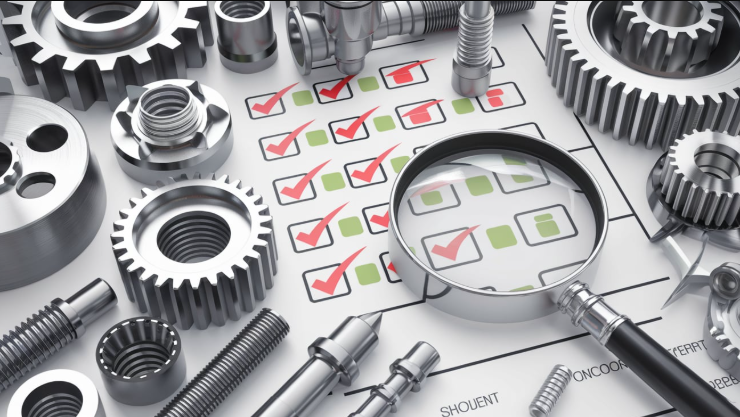
In the world of complex machinery and advanced systems, overall performance often comes down to the smallest components. From aerospace to medical devices, the final product is only as strong as its weakest part. This is where precision parts play a critical role. These components, manufactured to exacting tolerances, are the unsung heroes behind engineering excellence. They ensure reliability, enhance efficiency, and drive innovation across countless industries.
The demand for greater performance and miniaturization means that the margin for error has all but disappeared. A slight deviation in a single component can lead to catastrophic failure, costly downtime, or reduced operational life. Understanding the importance of precision manufacturing is key to appreciating the engineering marvels we rely on every day.
Enhancing System Performance and Efficiency
The primary function of any engineered system is to perform a task efficiently. Precision parts are fundamental to achieving this goal. When components fit and move together with minimal friction and perfect alignment, the entire system operates more smoothly. This reduces energy loss, minimizes wear and tear, and maximizes output.
Consider a high-performance engine or a sophisticated robotic arm. Each gear, bearing, and actuator must be manufactured with incredible accuracy. A deviation of even a few micrometers can compromise the system’s speed, power, and accuracy. By ensuring every part meets strict specifications, engineers can push the boundaries of performance and create more efficient and powerful machines. This level of detail is what separates a standard product from an exceptional one.
Ensuring Reliability and Durability
Reliability is a non-negotiable requirement in most engineering applications. Industries like aviation, automotive, and power generation depend on machinery that can operate continuously without failure. Precision parts are the foundation of this dependability.
When components are manufactured with high precision, they are less susceptible to premature wear, fatigue, and stress-related failures. The consistency in manufacturing ensures that each part will behave as predicted under operational loads. This predictability is crucial for maintenance planning and for ensuring the safety of the system. For instance, many OEM compressor manufacturers rely on precisely machined valves and pistons to guarantee that their equipment can withstand continuous, high-pressure operation for years. The use of high-quality, accurately made components directly translates to a longer service life and greater trust in the final product.
See also: From Couch to Crushin’ It: 6 Productivity-Boosting Tools Every Remote Worker Needs
Driving Innovation and Miniaturization
The relentless drive toward smaller, more powerful technology is made possible by advances in precision manufacturing. As electronic devices, medical implants, and scientific instruments become more compact, the components inside them must shrink accordingly. This trend toward miniaturization requires manufacturing processes that can produce tiny, complex parts with extreme accuracy.
Precision engineering allows for the creation of intricate designs that were once impossible to produce. This capability opens the door for new inventions and improvements on existing technologies. Whether it is developing a smaller satellite or a more effective medical diagnostic tool, the ability to manufacture minute and complex parts is a key enabler of innovation. Without precision, the progress we see in fields like telecommunications and healthcare would slow dramatically.
The Foundation of Quality Control
Ultimately, the commitment to precision parts is a commitment to quality. It reflects a deep understanding that excellence is achieved through attention to detail. In a competitive global market, delivering a superior product is what sets a manufacturer apart. This quality is not just a feature of the final assembly but is built into every single component. By integrating precision parts, companies can reduce warranty claims, improve customer satisfaction, and build a reputation for excellence. The initial investment in high-quality components pays dividends through enhanced performance, superior reliability, and the ability to create next-generation products. In engineering, success is measured by performance and longevity, both of which begin with the precision of the parts used