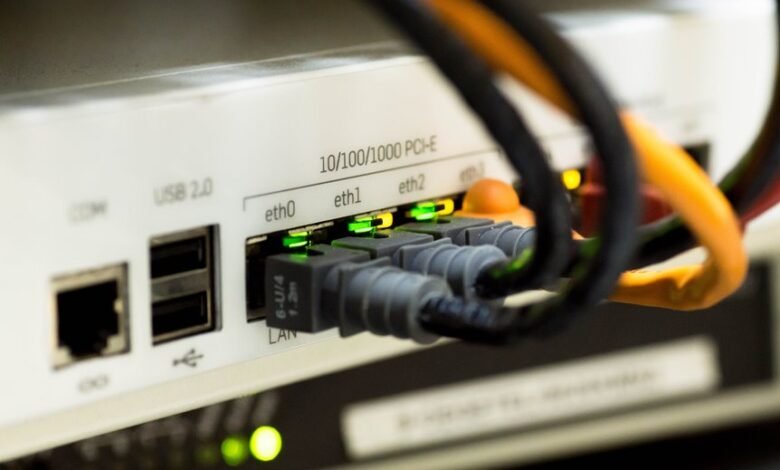
194.233.66.232 is a public Internet address assigned to a network device or server and functions as a routed endpoint for traffic exchange. It traces to a regional registry and a corporate owner, with governance contacts for coordination and security policies. In practice, it supports interdomain routing, transit, and peering, enabling controlled packet flow and traffic engineering. Its significance lies in governance, privacy, and auditable safeguards, inviting further scrutiny about ownership, routing policies, and risk management.
What Is 194.233.66.232? a Simple Breakdown
194.233.66.232 is an IP address on the public Internet assigned to a network device or server rather than a single endpoint.
The entry facilitates routing and identification within transit networks, not user content.
This analysis for subtopic not relevant to the other H2s informs routing practice and governance.
Discussion ideas about Subtopic not relevant to the Other H2s listed above emphasize structural transparency.
Where Is It Located and Who Owns It?
Where is the IP address physically and organizationally situated, and who holds ownership responsibilities for the entity assigned to it?
The allocation traces to a regional Internet registry, with the hosting entity registered under a corporate owner and a contact point for governance.
Location hints include data centers and peering points; unrelated topic and privacy concerns shape ownership transparency and accountability.
How Is 194.233.66.232 Used in Practice?
In practice, 194.233.66.232 is employed as a routed endpoint within network infrastructure, functioning as a transit or peering connection that facilitates packet exchange between autonomous systems. It enables route reflection, policy-based filtering, and traffic engineering at exchange points. This enables redundancy and scalable interconnectivity. Based on the prompt, here are two two word discussion ideas (comma separated) not relevant to the listed H2s: unrelated tangents, speculative rumors.
Why This IP Matters and How to Use This Info Safely
From a practical standpoint, recognizing the role of 194.233.66.232 helps stakeholders assess network reliability and security implications in interdomain routing. The IP’s visibility informs trust boundaries, anomaly detection, and policy enforcement. This matters for freedom-seeking audiences who value transparency.
Consider privacy concerns and data governance implications, ensuring responsible disclosure, controlled use, and alignment with ethical standards while maintaining robust, auditable safeguards.
Frequently Asked Questions
Can I Ping 194.233.66.232 for Latency Checks?
Yes, one can ping 194.233.66.232 for latency checks. The method measures round-trip time, packet loss, and jitter, providing a basic indicator of reachability and performance between the source and destination, suitable for quick network health assessments.
Is 194.233.66.232 Associated With a VPN Service?
194.233.66.232 is not definitively tied to a VPN service; its VPN association may change with Ownership changes. Like a moving target, it requires ongoing verification, as ownership transitions can alter VPN affiliation and attribution.
How Often Does 194.233.66.232 Change Ownership?
The frequency of change ownership for 194.233.66.232 is variable and not fixed; IP history shows occasional reassignment, typically aligned with provider changes or policy updates, rather than a predictable cadence of ownership transitions.
Are There Legal Concerns Using Data About 194.233.66.232?
The question: yes, potential legal concerns exist when using data about 194.233.66.232, including privacy policy implications and terms of service constraints; researchers should assess data provenance, consent, and compliance with applicable privacy and security regulations.
What Are Common Security Risks Involving This IP?
Common security risks involving this IP include exposure to data privacy breaches and aggressive traffic monitoring, with potential for misrouting or spoofing, and susceptibility to scanning, botnet activity, and credential harvesting that undermine user autonomy and network integrity.
Conclusion
194.233.66.232 is a public Internet Protocol address allocated to a network device or server, functioning as a routable endpoint rather than a content host. It traces to regional Internet registries and corporate ownership, with governance contacts for coordination and compliance. In practice, it serves as a transit or peering point, supporting interdomain routing, route policy, and traffic engineering at exchange points. Visibility aids security, trust, privacy considerations, and auditable governance.
Conclusion: Like a keystone in a distant arch, 194.233.66.232 anchors complex routing with quiet precision, enabling reliable interdomain exchange.