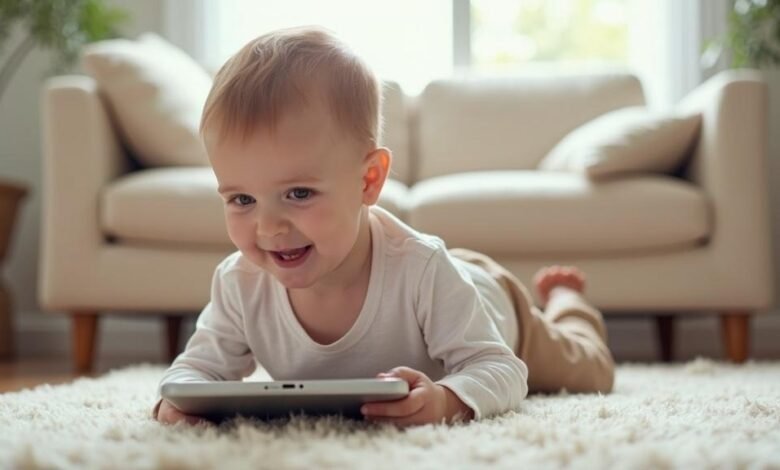
The past couple of years changed this category fast. AI companions that hold real back-and-forth conversations with a five-year-old are now a genuine thing, not a pitch deck promise. That shift matters because the old generation of apps mostly served up flashcard drills. Fine for some kids. Useless for many others, especially kids who shut down the second something feels like a test.
Here is what I found after going through the options that are actually available right now.
1. Little Words
Verdict: Best overall for ages 2-8, especially neurodivergent kids.
Free trial available, then monthly or yearly subscription managed in device settings. No ads. COPPA compliant. No data sold.
Buddy, the app’s AI character, holds real spoken conversations with a child. No menus to tap through, no words to read, no typing. A pre-reader who has never touched a keyboard can use it from the first session. That alone separates it from most of the field.
Before each session, Buddy checks in on the child’s mood and adjusts his energy level accordingly. Sensory presets (calm, gentle, or high-energy) are parent-controlled. Sessions run five to twenty minutes, which fits short attention spans without pushing a kid to the edge. Buddy stores the child’s name, preferred subjects, and conversation history so each session picks up where the last one ended. That continuity makes it feel less like an app and more like a familiar routine.
Speech games include “What’s That Sound” and “Voice Maze,” woven into adventure worlds (Space, Ocean, Forest, Dinosaurs). Buddy never marks an answer wrong. He models the correct pronunciation and moves on, which is how a lot of good therapy works anyway.
Parents get a dashboard, weekly sharable progress cards, and SLP-style PDF reports you can actually bring to a therapist appointment. Target-sound settings let you focus on specific sounds like r, l, sh, or th.
It is a practice tool, not a clinical service. No app of this kind substitutes for a credentialed speech-language pathologist. But for daily low-pressure practice between sessions, or for families on a waitlist, it is the most thoughtfully designed option I found.
2. Speech Blubs
Verdict: Strong pick for structured video-based practice.
About $14.49 per month, $59.99 per year, or $99.99 lifetime. Over 1,500 voice-controlled activities. Built for kids with apraxia, autism, speech delay, and ADHD. The app uses video models and face filters to encourage sound imitation. More screen-directed than Little Words. Works well for kids who respond to visual cues.
3. Articulation Station (Little Bee Speech)
Verdict: Best pure articulation drill tool, SLP-built.
Around $59.99 one-time for the Pro version. Built by speech-language pathologists. More than 1,200 target words organized by sound position. This is structured, clinical drill practice. Not gamified in any deep sense. Great if your SLP recommends specific sound targets and you want a clean, focused app to run homework sessions.
4. Otsimo
Verdict: Good entry-level option for autism and apraxia support.
Roughly $4.49 per month on annual billing, $6.99 monthly, or $115.99 lifetime. Over 200 exercises. The app includes AI feedback and is specifically designed for autism, apraxia, Down syndrome, and non-verbal kids. The price point is accessible. The exercise library is smaller than some competitors, but the targeting is specific.
5. Tactus Therapy Apps
Verdict: Clinical quality, narrow audience.
Individual apps range from about $9.99 to $99.99. Designed primarily by SLPs for clinical or home practice. These are evidence-informed, detailed, and specific. Better suited for older kids or families already working with a therapist who recommends a particular module.
6. Constant Therapy
Verdict: Broader age range, evidence-based structure.
Covers a wider span of ages than most apps on this list. The exercises are research-backed and track progress in detail. More suited to school-age kids and above. Families dealing with acquired language issues (not just developmental delay) may find it particularly useful.
7. Hallo and AI Language Practice Tools
Verdict: Conversation practice, not speech therapy.
AI conversation apps like Hallo are built for language learning, not speech disorders. For a typically developing child learning a second language or building general fluency, they have real value. For a child with apraxia or a phonological disorder, they are not the right fit.
8. Teletherapy with a Licensed SLP (e.g., Expressable)
Verdict: The actual gold standard. Not optional if delays are significant.
Platforms like Expressable connect families with licensed speech-language pathologists via video sessions. No app replaces this. If your child has a diagnosis or a meaningful delay, a licensed SLP is the baseline, not a bonus.
9. ASHA Free Resources
Verdict: Free, credible, worth bookmarking.
The American Speech-Language-Hearing Association publishes free parent guides and milestone checklists. Not an app. Genuinely useful for figuring out whether your child’s speech pattern warrants a referral.
10. Public Library Apps and Story Platforms
Verdict: Low-pressure listening and vocabulary exposure.
Apps available through library cards (Libby, Hoopla, and similar) offer audiobooks and read-alongs that build vocabulary and phonemic awareness passively. Not speech therapy. Useful supplemental time.
11. YouTube Speech Therapy Channels
Verdict: Free practice support, no accountability.
Plenty of licensed SLPs post articulation exercises and parent coaching videos publicly. Inconsistent quality. No personalization. Best used as a complement to structured practice, not a replacement.
Common Questions
Is Little Words actually usable by a two-year-old who can’t read yet?
Yes, and that is one of its most practical design choices. Buddy operates entirely through spoken conversation. No menus, no reading, no typing required. A child who has never touched a tablet before can engage from the first session, which puts it in a genuinely different category from most apps aimed at this age group.
When does Speech Blubs make more sense than Little Words for a child with apraxia?
Speech Blubs leans on video models and face filters, so it tends to work better for kids who learn by watching and imitating mouth movements. If your child’s SLP has specifically mentioned visual cueing as part of their approach, or if your child responds better to watching a face than listening to a voice, Speech Blubs is worth trying first.
Can Articulation Station replace the speech homework my child’s SLP sends home?
It can support that homework, not replace it. Articulation Station’s 1,200-plus target words are organized by sound position, which maps well onto what most SLPs assign. Run it by your therapist first. Many SLPs are familiar with the app and will tell you exactly which sounds and word positions to focus on during home sessions.
What is the actual difference between a speech practice app and a service like Expressable?
Expressable connects your child with a licensed, credentialed speech-language pathologist who can evaluate, diagnose, and build a treatment plan specific to your child. Apps like Little Words or Otsimo are practice tools. They can reinforce what a therapist teaches, but they cannot assess a child, identify a disorder, or adjust a clinical approach based on what they observe.
Is Otsimo worth it for a child who is mostly non-verbal?
Otsimo is specifically designed with non-verbal kids in mind, which is not something most apps on this list can say. The exercise library is smaller than competitors at around 200 activities, and the monthly price is low enough to test without a big commitment. For a non-verbal child, pairing it with teletherapy through a platform like Expressable would give you a much stronger combination than either option alone.
A Note Before You Download Anything
I am a parent and writer, not a speech-language pathologist. Nothing in this article is a clinical recommendation. If your child is missing milestones, starting with a licensed SLP evaluation is the right first step, not an app store. These tools are practice aids. Some are genuinely good ones. None of them diagnose, treat, or cure anything.
Sources
- American Speech-Language-Hearing Association (ASHA), asha.org, public milestone and resource pages
- Speech Blubs public pricing and feature descriptions, speechblubs.com
- Little Bee Speech / Articulation Station app store listings and developer site
- Otsimo public pricing and feature descriptions, otsimo.com
- Expressable teletherapy platform, expressable.com
- Tactus Therapy app listings, tactustherapy.com